Wednesday, June 20, 2007

Catalona Appeal Ruling: Patients Don't Control Their Tissues

Some time ago, I wrote this story for the New York Times Magazine titled, "Taking the Least of You: Those blood and tissue samples you routinely give - where are they? Who owns them? What are they being used for? And how come you don't know?" Since that story ran, I've been publishing updates here on the Washington University vs. William Catalona trial that I covered -- it was a potentially landmark court case that questioned whether patients can control the use of their tissues in research, and whether they retain any property rights in their excised body parts (in this case, Washington University claimed ownership of 6,000 tissue samples from patients who asked that their samples be removed from the university's prostate cancer bank, which is worth millions of dollars).


Well, here's another update: Initially, the court ruled in favor of Washington University, saying individuals don't own their tissues. Catalona and his patients appealed. This morning, the 8th District Court finally ruled on that appeal: Their decision states, "We affirm the well-reasoned opinion and judgment of the district court." In other words, they ruled against Catalona and his patients, saying that they don't own their prostate cancer tissues, Washington University does. You can read the full decision here.
This ruling is a serious blow to the patients' rights advocates who've spent decades fighting for people to have control how researchers use their their bodily tissues (and the DNA inside them). This ruling reaffirms the precadent set by the famous John Moore case. But the Catalona case isn't over yet, I'm sure. More on this decision, and the case, soon.

Labels: , , , ,

Sunday, August 20, 2006

Time to Toss the BMI

One of the most widely reported science stories yesterday was about a group of scientists who've just shown that the standard measurement of obesity -- the Body Mass Index (BMI) -- is completely flawed. All the media coverage made it sound like this was a new and surprising finding, but in fact, the BMI has been known to be flawed for years.

I wrote about this last June, when a study from the CDC was widely misreported as saying that people who were slightly overweight lived longer than those who weren't overweight. People went nuts. In a column I was writing for Popular Science at the time, I explored the problems with that study, and the way it was being interpreted by the media (and therefore the public). The biggest problem, I wrote, was the BMI:
"The study’s most obvious limitation is its use of the unreliable “body mass index” (BMI)—a number determined by a person’s height and weight—to define “normal” and “overweight.” A BMI of between 18.5 and 24.9 is “normal,” between 25 and 29.9 “overweight,” and 30 or more “obese.” But BMI doesn’t take into account many important factors: physical activity, fat versus muscle, gender, diet. This means George W. Bush—a nearly-six-foot-tall 200-pound guy who eats well and works out regularly—has the same BMI as a six-foot-tall 200-pound guy who sits on the couch all day eating junk. With a BMI of 27.1, they’re both “overweight.” But President Bush has precisely the right amount of body fat for his age, and he’s in great cardiovascular health. I’d like to see the same study use some kind of body fat index. Bush’s percentage of body fat is 18.3, which is considered excellent for his age. Not the case for that out-of-shape guy on the couch."
When you scrap the BMI and determine obesity by looking at hip-to-waist ratio instead, which is what these authors did, you actually triple the number of people who qualify as being at risk for heart disease. Many will argue against this, but the way I see it, this Lancet study (free registration required), has finally proven that BMI is not the way to go. That always seemed pretty obvious via common sense. But common sense doesn't always apply when dealing with obesity, so apparently we need hard stats to back it up.

Labels: , ,

Friday, May 19, 2006

Multi-Vitamin Confusion: To Use or Not To Use


Scientists behind a large federal research study on multi-vitamins have concluded that they have no idea what to tell you about using multi-vitamins, because there's not enough evidence for or against using them.

Labels: , ,

Cell Phones and Cancer, and Cell Phones and Children

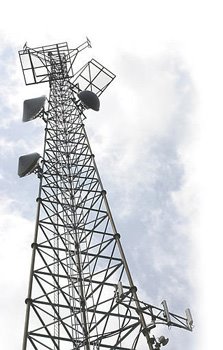
If you've ever doubted whether you should bother using your headset when you talk on a cell phone, perhaps this news will sway you: The top two floors of a Melbourne building were closed a few days ago after seven office workers were diagnosed with brain tumors (four were diagnosed within two weeks of each other). Their offices were directly below the mobile phone transmitters on the roof. The cell phone companies say the towers are fine, but are investigating any connection.

Meanwhile, the mayor of NYC has banned cell phones in schools, and parents don't like it one bit.

Labels: , ,

Ancient Tattooed Women and Humans Mating with Primates

I've got a backlog of posts since I've been offline for more than a week -- I originally posted them as one long post, but realized they'd get lost in the archives quickly, so I'm re-posting them individually. They're all going to be short for reasons that will quickly become clear, but I'll come back and comment on some of these in future posts. Here's the first:

In the ancient history department: Archeologists found a 1,500-year old female mummy covered in tattoos in a Peruvian pyramid, and DNA analysis showed that humans and chimps mated at some point, and we may be their offspring.

Labels: ,

Thursday, May 04, 2006

Good News for the Future of Obesity

A stunning piece of news: The nation's three biggest soft-drink companies announced that they're removing Coke, Pepsi, sweet iced teas and other such drinks from school cafeterias and vending machines. Have they finally come to their senses and realized they're on one of the top causes of the current obesity epidemic among children and record rates of diabetes, heart disease and the like? Nope: They're worried about lawsuits. Which is great news. (Thanks to Ben for pointing this out!)

Labels: ,

Thursday, December 08, 2005

Of Note: Speaking of schizophrenia (and sex and art)

In my last post, I wrote about an interesting story my friend Mike Rosenwald wrote for Esquire, about a scientist who believes that schizophrenia is caused by house cats (you have to read the article to understand that one). Now, a group of scientists has come out with another fascinating explanation for schizophrenia (and it has nothing to do with house cats).

Daniel Nettle, a psychologist at the University of Newcastle, just published a study showing that people with schizophrenic-like personality traits (and therefore genes predisposing them to schizophrenia) are more likely to do two things: Become artists and have more sexual partners. And this, Nettle believes, is why schizophrenia hasn't vanished as a disease.

Evolutionarilly speaking, it's a bit baffling that scizophrenia hasn't been selected out of the gene pool, since scizophrenics don't tend to reproduce (they may be less able to have children physically, and their challenges relating to others can make it difficult to find mates). But scizophrenic genes don't always cause full-blown schizophrenia: People with a family history of schizophrenia can display varying degrees of scizophrenic-like behaviors (magical or mystical thinking, a decreased or distorted perception of self and others, etc), but not actually be scizophrenic themselves. Nettle believes that when a person's genetic tendency toward schizophrenia leads to creative thinking instead of full-blown schizophrenia, it gives them an evolutionary advantage, because they're more likely to become artists, and artists, he says, are more "sexually successful."

In a survey of 425 British adults, researchers found that serious poets and visual artists generally had more sexual partners than those who were either not artistic or only dabbled in the arts. Further analysis showed that one personality dimension -- a tendency toward "unusual" thoughts and perceptions -- was related to both creativity and sexual success. That tendency is also seen in people with schizophrenia. And the findings, according to the study authors, may help explain why schizophrenia -- a mental disorder that often runs in families -- has not been extinguished from the gene pool ...

It's all very interesting, though not entirely convincing yet: This connection between "unusual mental abilities" and scizophrenic tendencies and art and sex is pretty loose. I buy the claims individually -- that "successful creative types" (which he doesn't define) are "sexually successful," and that people with scizophrenic-like tendencies are likely to become artists (some brilliant artists have suffered from scizophrenia, like Pink Floyd's Syd Barrett, and many others). But it seems like a big jump to say this might explain the persistance of scizophrenia in the gene pool.

Here's something I find curious: Schizophrenic-like personality traits are the center of much non-scizophrenia-related research these days. I just wrote a story for New York Times Magazine's annual Year in Ideas issue (which hits newsstands on December 11th) about a scientist who's found an explanation for why yawning is contagious. He used these same schizophrenic-like traits to uncover the cause of contagious yawning (stay tuned, I'll post that story when it runs in the magazine in a few days) ...

Labels: , , , ,

Saturday, November 19, 2005

Of Note: Finally, an Explanation for the Crazy Cat Lady in 5B

My good friend and ever-brilliant writer Michael Rosenwald has a must-read profile in the current issue of Esquire: It's about a scientist who thinks house cats cause schizophrenia. As a scientist, there are moments where this guy sounds like he's onto something, others where he sounds like a complete quack. And this, of course, makes him a fabulously interesting character:

"People frequently mischaracterize Dr. Fuller Torrey's feelings about cats. The other day, an acquaintance gave him a present—a framed five-by-seven photograph of a white kitten sitting on a windowsill, his front paws held up like he was being robbed, a semiautomatic handgun pointed at his head. "Isn't that just wonderful?" Torrey says, looking at the photo in an office full of similar cat jokes. Still, he swears no hostility toward cats. "I like them," he insists. "I actually enjoy being around them." People naturally assume Torrey would enjoy traumatizing cats because he believes that cats make us insane—that they are the leading cause of human schizophrenia. Torrey's theory has led his wife to one of her own: Her husband will one day be assassinated by a cat lover ..." (See the full article for more.)
Now, I must point out a few things. First, the title of the article is "Finally, an Explanation for the Crazy Cat Lady in 5B." I live in apartment 5B. I think this is no coincidence, though Mike swears it is. And second: Don't pack your cat off to the shelter just yet -- as the story points out, this guy's research has a long way to go. And third: My friend Mike is a great writer. If you agree and want more, check out his ASME finalist story "Yesterday They Would Have Died," from Popular Science, and his recent New Yorker story "Drawing Pitchers."

And in case you're wondering about the air silence since my last post: I've been on the road working on a complex science story for the New York Times Magazine, finalizing some details for my book, and giving talks about my book at the University of Wisconsin in Madison for their History of Medicine and Bioethics Program (an absolutely wonderful place and department, though it was inhumanly cold and snowy the whole time I was there).

Labels: , , , , ,

Thursday, September 29, 2005

Of Note: Scientists Finally Quell My Quicksand Phobia

It's fair to say that, growing up, I worried more than your average kid. I worried about normal things, like my parents dying. But more than anything, I worried about the impossible: Airplanes falling from the sky and landing on me; my brother getting drafted and shipped off to die in battle at age ten. At one point, thanks to Tarzan, I became acutely phobic of killer bees and man-eating-ants. My parents told me they didn't exist in the US, but I looked at a map and convinced myself that they could easily come from South America to my backyard in Illinois. But my biggest phobia for several years -- one that kept me up at night -- was quicksand.

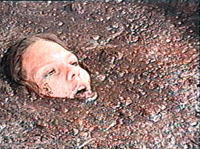
My brother and I watched a lot of weird 70s jungle shows -- and played weird jungle video games -- so in my world, people were constantly getting stuck in quicksand. They'd flail around screaming as friends threw them sticks, shirts, whatever -- desperately trying to pull them out -- but nothing ever worked. And it all happened so fast: They were just walking along and suddenly, squish, they're up to their waist, chest, neck, then they're gone. Just like that.

I secretly feared walking in the park down the street from my house because of the quicksand. Today, I know there was no quicksand in Illinois. But as a kid, it seemed an obvious risk: There were vines hanging from trees, there was sand on the trail, it looked just like the woods in the movies -- why wouldn't there be quicksand?

I'd completely forgotten about this old phobia of mine until a few months ago, when I watched Lawrence of Arabia for the first time in years. At what felt like hour six in the movie, there's a graphic scene where a young boy dies in quicksand. At that point, I suddenly remembered my old quicksand fear and thought, See, that's why I live in New York City ... no quicksand!

So all of this is to say, I was very relieved to hear the news yesterday that scientists have reported that quicksand is not, in fact, as dangerous as all the movies make it seem. If you fall into quicksand, instead of being completely consumed by it, you will actually only sink to your waist. Then you float. But you're not exactly homefree: To just pull one leg out of quicksand, their study says, it takes the same amount of force needed to lift a car. Fortunately for all of us, the scientists offer tips for getting out:

"... while the risk of vanishing has apparently evaporated, escaping the muck is still a tough task: ... There are tricks, however. Quicksand is a mixture of fine sand, clay and saltwater. Once perturbed, the mixture transforms from a loose packing of sand on top of water into a dense, liquid soup. Movement by a victim makes things worse.

"The higher the stress, the more liquid the quicksand becomes, so movement by a trapped body causes it to sink in deeply," study leader Daniel Bonn of the University of Amsterdam writes in the Sept. 29 issue of the journal Nature. After the mix liquefies, the quicksand splits into a water-rich phase and a sand-rich one. The wet sand sediment becomes so densely packed that it's harder to move than cold molasses. Once the victim's foot becomes stuck in it, the situation is dire ... How to get outBonn and his colleagues found, however, that if a you remain calm, you can actually float your way to safety.

"The researchers simulated a quicksand pit in the lab and placed an aluminum ball of greater density than the quicksand on top of the pit. The ball didn't sink until the researchers began to shake the pit, simulating movement and turning the mixture of sand and water more liquid. When they did this, the ball sank right to the bottom.

But when they used an aluminum ball with a density equal to the human body, which is less than the density of quicksand, they found it impossible to sink the ball, no matter how hard they shook the pit ... The advice : Stay calm and eventually you'll float. Stretch out on your back to increase your surface area and wait until your legs pop free. Bonn also suggests moving your legs around at this point, to stir in water, which will help you float. "You have to introduce water into the sand," Bonn said. "And the easiest way to do that is to make it trickle along your leg into the quicksand, by making a circular motion with your leg."
Now, call me crazy, but I'm thinking -- if I'm stuck in quicksand and the only thing that can get me out is some water trickling down my leg, I'd be making more than circular motions, if you know what I mean. But either way, I'm in no hurry to test their theory: They did this reserach using aluminum balls in simulated quicksand. I'll wait until they work it out with actual people in actual quicksand ...

Labels: , , , ,

Sunday, September 25, 2005

Of Note: A River of Cocaine

A group of scientists studying drug use in northern Italy recently reported that, based on the amount of cocaine byproduct found in the River Po, the 5 million people living near the river consume about 200,000 lines of cocaine each day (that's about $150 million worth of cocaine per year).

Cocaine breaks down in the body to form a compound called benzoylecgonine, which is excreted in the urine along with trace amounts of actual cocaine. In the region around the River Po, apparently benzoylecgonine goes from Italian toilets to Italian water processing plants, straight into the River, where scientists can isolate and measure it using mass spectrometry. In a similar study, these scientists found large quantities of prescription drugs contaminating the river as well.

Labels: , , ,

Saturday, July 30, 2005

Of Note: Pig Fever and Killing With Censorship

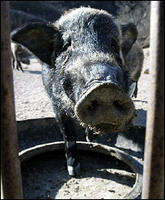
The recent outbreak of what was first simply called "swine fever" has been loosely traced to a bacteria found in pigs. The Chinese government says the bacteria, streptococcus suis, has killed 32 people and infected about 140 others, but there are some questions about whether that's true (which I'll get to in a minute). The Chinese government has finally started warning farmers about the disease -- saying they shouldn't eat sick pigs -- but they've been very slow to admit they have a problem on their hands. And they still swear pig fever is no big deal: China's Health Minister, Gao Qiang, insists that the outbreak is "under control," despite an increasing death toll and number of cases (the World Health Organization disagrees with him -- as spokesperson Bob Dietz says, "This is a disconcertingly high mortality rate”).

This kind of denial is a nasty habit with China -- their denial of SARS led to increased death rates and global panic. The Chinese government fears bad press, damage to the tourism industry, and the impact those things might have on their control over citizens, so they drag their feet and deny problems. Meanwhile, the disease gets worse: This swine fever has now spread to 100 villages, maybe more. No one knows for sure. Because the truth is, since the government controls the press in China, no one actually knows what's going on. And to me, that's the scariest part of this:

"State media says the pig disease is under control, but the authorities have banned independent reporting on the outbreak. The BBC's Nick Mackie in neighbouring Chongqing says foreign journalists found speaking to people are detained, and their notes and recordings erased; no official interviews are granted."

That's scary stuff. Reports about a government repeatedly letting its people die simply because said-government fears bad press ... that's something that could make a person question their rulers. And the Chinese government can't have that. So instead of allowing dissemination of information in order to save their citizens, they "detain" journalists and destroy their notes. They censor websites and filter out any news they don't want to their people to read (they'll surely be censoring this site any minute now). The effect this kind of censorship could have on the world is no joke: As everyone knows, the much-feared next flu pandemic will probably start exactly this way. People in China or a similar country will get the disease from chickens or pigs, the disease won't be properly contained in time, and it will spread to kill thousands, maybe millions worldwide.

Some reports are already calling this a swine flu, though as far as anyone knows, this is being caused by strep suis, not a flu virus. But the Chinese government hasn't allowed any independent laboratories to verify that diagnosis by looking at the samples, and the WHO and many experts doubt that a problem of this scale could be caused by strep suis, which has never killed so many or spread so fast, and which doesn't usually cause a key symptom seen in this outbreak: Bleeding under the skin. Unfortunately, the Chinese government has a bad track record in this department too: They originally claimed SARS was caused by a harmless infection too. So all of this means either strep suis has suddenly become more aggressive than ever, or the problem is being caused by something else.
"WHO spokesman Bob Dietz said it was too soon to say the bacteria was the cause or the only cause of the outbreak, adding that more laboratory tests were needed to see if other factors may be at work.'We can't discount the possibility there could be other bacteria, virus or something else active in here,' Dietz said."

Whatever turns out to be causing this, I'd be nice if countries that shun freedom of the press saw this as a test run and realized that their censoring ways could actually help cause a pandemic. But they're clearly not going to do that. I just hope that, as technology continues to move forward and information spreads online, restricting information will become a losing battle for everyone.

Labels: , , ,

Tuesday, July 19, 2005

Of Note: Drug-Induced Gambling

(I wrote and posted this about a week ago, but it never showed up on my blog for some reason, so I'm posting it again now. ) A few years ago I wrote a story for Popular Science about the science of addiction. At that point, several researchers I talked to suspected that having abnormally hight levels of dopamine -- a hormone that transmits signals in the brain -- might be connected to things like compulsive gambling, compulsive eating, and several other "behavioral addictions." They didn't have much scientific evidence to back up their hunch. And they weren't warmly received by a good chunk of the medical community since their idea smacked of medicalizing human behavior, of giving people excuses for pathologial behaviors. It's not my fault I can't stop gambling/eating/ exercising/shopping/looking at online porn ... my dopamine levels are off!

That whole debate pretty much faded from public view, but it might be resurfacing soon: A new potential Parkinson's drug may have just accidentally provided some hard science for the dopamine-and-addiction debate: The movement problems in Parkinson's patients are caused by dopamine deficiencies, so several studies have looked at treating them with a class of drugs called dopamine agonist -- drugs that essentially trick the brain into thinking it has more dopamine than it does. They hoped this would help Parkinson's patients move more normally, and it does. But in some cases, it also made them compulsive gamblers.

Eleven people with Parkinson's disease temporarily became compulsive gamblers After taking a class of drugs designed to control movement problems caused by the illness, a new study reports. "This is the latest in a series of case studies linking such drugs -- called dopamine agonists -- to pathological gambling in Parkinson's Patients. This lends continued support towards the hypothesis that this family of medicines may cause difficulty with behavioral issues in this population of patients," said Dr. M. Leann Dodd, lead author of the study and senior associate consultant in the department of psychiatry and psychology at the Mayo Clinic, in Rochester, Minn.

That's one way to look at it: These drugs could definitely cause difficult "behavior issues" by turning Parkinson's patients into addicts of all kinds. But the side effect is pretty minimal: The drug helps hundreds of thousands of Parkinson's patients; the compulsive gambling thing only happens in 1% of those. The other way to look at it is, Whoa! How could a drug lead to gambling?! In some cases, it also led to an increased appetite for food, alcohol and sex. But at this point, we don't know much about the neurology of how these drugs caused these addictive behaviors, and the sample size of this study was so tiny, it's too soon to say much of anything. I'm sure this will lead to lots of interesting addiction research, and I'll be watching closely to see where it goes. But if anybody I know starts blaming their compulsions on dopamine levels, they get a swift kick. Beause it's just not that simple ...

Labels: , , , ,

Thursday, July 14, 2005

Of Note: How Science Finally Vindicated My Hate of Showering

When I was a kid, I refused to shower. Not just once, but always. My parents spent much of my childhood trying to think up new and clever ways to trick me into showering (buying cool shampoos and body-paint soap, or calling the whole thing "shaking a tower" instead of "taking a shower"). But nothing worked. I'd lock myself in the bathroom, turn on the water, stick my hair under the faucet so it looked showered, give my dry body a quick rub with a bar of soap so it smelled showered, then sit on the toilet lid with the water running for a while to make the whole thing seem legit. Of course, I did end up in the shower fairly regularly, but it was always a fiasco of tears and whining and flailing arms and legs.

The thing is, honestly, I never got over hating showers. I mean, don't get me wrong ... I shower, and no one has to throw me in the tub. I just don't like it. Feels like a waste of time: The shaving, the hair washing and hair drying, it takes forever. So getting me into the shower is still a chore: I'll walk around the apartment all day saying "I'm about to get in the shower" while my boyfriend laughs at me saying, "yeah, right."

Needless to say, this is not something I usually discuss publicly. But ALL of this is necessary background to understand why I feel especially vindicated by the recent news that daily showers can actually cause brain damage.

Scientists believe that breathing in small amounts of manganese found in water may harm the central nervous system. Dr John Spangler, of Wake Forest University in New Carolina, said: "If our results are confirmed, they could have profound implications for the world. Inhaling manganese, rather than eating or drinking it, is far more efficient at delivering it to the brain." Manganese is in food and rocks and enters the air, soil and water. It damages the brain leading to learning difficulties, tremors and changes in behaviour. Dr Spangler's team claim that a 10-minute shower a day for 10 years would expose children to three times higher doses than would be needed to damage a rat's brain. Adults with more years in the shower would receive doses 50 per cent higher.

See! I knew there was a reason I hated showers! I read this and immediately emailed my best childhood friend, Quail, who also happens to hate of showers. I sent her the article and we emailed back and forth all day feeling brilliant about the whole thing: "All those people who made fun of us for hating showers are going to get manganese brain poisoning!"

It's actually not big news ... it's kinda just common sense: if there are things in the water, those same things are probably present in the water vapor, and you probably breathe them in when you shower. Just after high school, I worked in a natural pet food store in Oregon (yes, it's true) with a quirky high-strung woman named Nancy who was in her 70s but looked 40. She always swore that the secret to her youthful longevity was that she never took hot showers, because she didn't want to breathe in any vaporized chemicals from the water. Last time I talked to Nancy she was in her 80s and still hyper as ever. Maybe she was on to something.

Labels: , , , , ,